









Art for Small Spaces: Making a Statement Without Overwhelming

The instinct in a small room is to go small with the art. It's usually the wrong call. Scale is exactly what makes a compact space feel intentional instead of cramped.
Quick answer: In a small room, one larger print reads calmer than a cluster of small frames — scale, not size reduction, is what makes a compact space feel intentional. A single well-placed piece does more than a scatter of small ones.
One bold piece beats ten timid ones
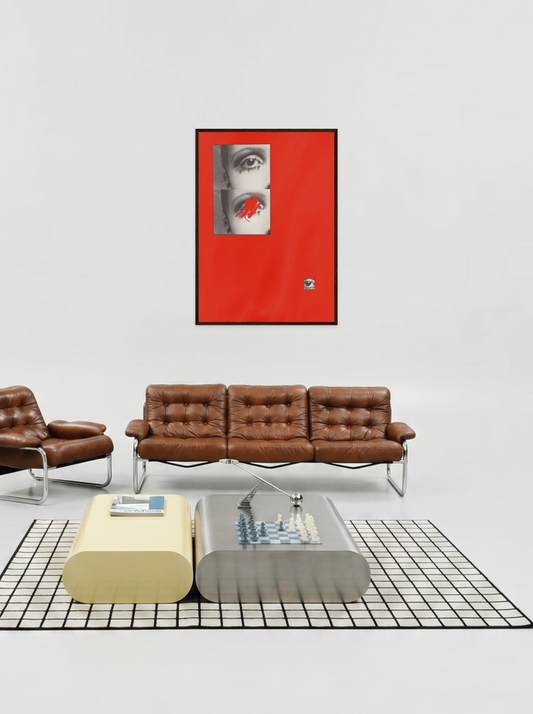
A single larger print gives the eye one clear place to land, which makes a room feel calmer and bigger. A scatter of tiny frames does the opposite — it chops the wall into busy fragments. If in doubt, go bigger and fewer.
Use the height you have
When floor space is tight, look up. A tall, portrait piece draws the eye vertically and makes ceilings feel higher. The narrow walls between doors and windows are perfect for a single slim format.
Lean, don't always hang
In a small space, a print leaning on a shelf or mantel reads relaxed — and saves you from committing to holes. It's also easy to swap as the room evolves.
Keep frames and palette quiet
Busy frames shrink a room. A consistent finish — black, or natural wood — and a restrained palette keep things cohesive. Let the image be the event, not the framing.
With MoBe
For most small rooms, a single 50 × 70 in one clean finish does more than a cluster of small prints ever will. Pick one piece you actually want to look at every day, and give it room to breathe.
Keep reading: How to Choose the Right Print Size · Build a Gallery Wall That Doesn't Look Cluttered · Where to Hang Art in Every Room